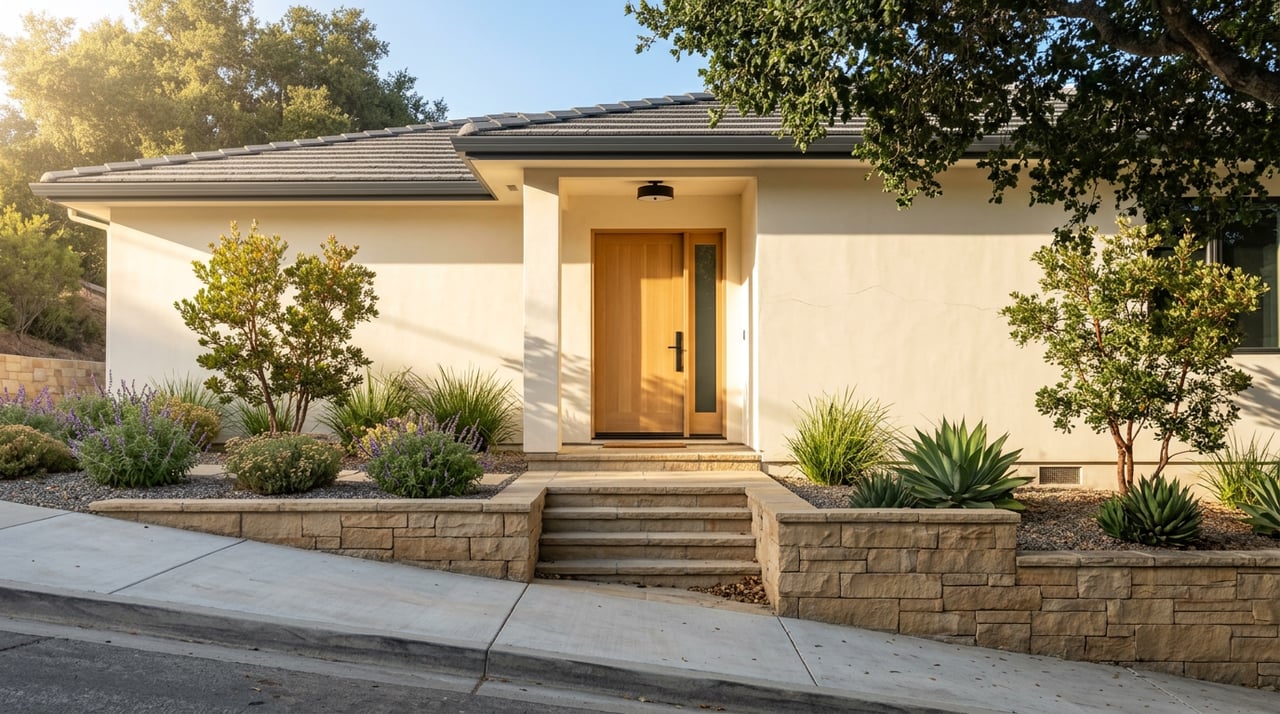
That hillside view over Altadena’s tree canopy is hard to beat. If you are eyeing a foothill property, it helps to know how these homes differ from those on the flats and what extra steps keep your investment protected. In this guide, you will learn the key risks, permits, inspections, insurance, and pricing factors that shape hillside ownership in Altadena. Let’s dive in.
Why hillside homes differ in Altadena
County, not city permits
Altadena is unincorporated, so you work with Los Angeles County for land use, building, and fire services instead of the City of Pasadena. That means county codes, departments, and inspection processes apply to your permits and post‑fire programs. You can confirm services and contacts through the county’s portal at Los Angeles County.
Terrain, privacy, and pricing context
Foothill homes sit on terraced slopes with more privacy and views. Many are custom builds designed around the land. Market-wise, ridge and view streets in Altadena often trade above broad city medians due to lot and view attributes. Always compare true hillside comps, not just citywide averages, because value varies block by block.
Hazard profile you should expect
Wildfire exposure and new rules
Altadena’s foothills experienced a major wildfire, the Eaton Fire, in January 2025. The incident burned large areas and caused significant structure loss in the foothill corridor, reshaping local risk awareness. You can review official incident records from CAL FIRE’s Eaton Fire page.
Following major fires, the State and local agencies update hazard maps. New designations of High or Very High Fire Hazard Severity Zones expand disclosure and defensible‑space requirements for many parcels. See coverage of these updates in the Los Angeles Times report on new fire hazard maps.
Debris flow after fires
Burned slopes are more vulnerable to fast-moving runoff and debris flows, especially in the first few winters after a fire. The USGS explains how burn severity, slope, and intense rain combine to produce debris‑flow hazards. Even with local debris basins and channels, risk is reduced, not eliminated. Pay close attention to lots below ravines and on small alluvial fans.
Seismic and slope stability
Slope movement, settlement, and seismic amplification are core hillside issues. For many hillside improvements, the county requires current geotechnical and engineering geology reports to address slope stability, foundations, groundwater, and mitigation. You can review county guidance in the LA County geotechnical permits manual.
Drainage and retaining walls
Drainage missteps are a top trigger for slope problems. Blocked subdrains behind retaining walls, poorly routed downspouts, or concentrated runoff from uphill parcels can turn minor issues into structural concerns. Documenting subdrains, outlets, and surface drainage is essential in escrow. The county’s geotechnical manual offers drainage and subdrain best practices to reference with your engineers.
Permits, inspections, and due diligence
Start with maps and jurisdiction
First, confirm whether the parcel sits in a High or Very High Fire Hazard Severity Zone and note any county overlays that affect clearing or building. These map checks drive disclosure and defensible‑space requirements. The Los Angeles Times overview of the State’s new mapping is a helpful starting point as you review official resources during escrow.
The right specialists to hire
- Licensed geotechnical engineer or engineering geologist: Complete slope stability and foundation due diligence and confirm what the county will require for any planned work. See thresholds and report types in the county’s geotechnical manual.
- Structural engineer: Evaluate retaining walls, piers, grade beams, and any signs of movement or prior slope repairs.
- Civil or drainage specialist: Verify subdrains, downspouts, and site runoff do not discharge onto neighboring properties.
- Certified home inspector with hillside experience plus pest: Ask for a focused review of flat roofs, decks, moisture, exposed footings, and drainage details.
AB 38 defensible space at sale
California’s AB 38 adds seller disclosure and defensible‑space documentation for properties in mapped High or Very High fire zones. Expect a home‑hardening notice for many pre‑2010 homes and either a defensible‑space pass report or a buyer‑seller agreement to complete it after closing. You can read the bill text on AB 38. LA County Fire also runs seasonal vegetation‑management and real‑estate inspections; see program details at LA County Fire’s hazard reduction programs.
Permits and unpermitted work
Pull county records for grading, retaining walls, driveway cuts, foundation repairs, and major landscape regrading. Unpermitted walls or grading are red flags and can be expensive to correct. The county manual outlines documentation standards and when updated or supplemental reports are required.
Timing your inspections
Geotechnical fieldwork, analysis, and structural review can take weeks to months based on scope. Defensible‑space inspections may also queue up in high‑demand seasons. Start geotech and fire inspections early in escrow so you can keep your timeline intact.
Insurance and lending realities
Getting homeowners insurance
After the 2025 fires, the California Department of Insurance took steps to stabilize coverage and expand carrier participation in higher-risk areas. Buyers should still expect careful underwriting, wildfire deductibles, and occasional placement in the FAIR Plan for fire coverage. Review recent policy guidance from the California Department of Insurance.
You can often improve insurability and pricing by documenting mitigation. The IBHS “Wildfire Prepared Home” program recognizes upgrades like ember‑resistant vents, Class A roofing, enclosed eaves, and a 0–5 foot noncombustible zone. Learn more through the IBHS Wildfire Prepared Home FAQ.
What lenders may require
Lenders expect proof of homeowners insurance at closing. For properties with active slope issues or in recent burn perimeters, a lender or appraiser may call for engineering reports or repair plans before funding. Confirm requirements with your lender early to avoid delays.
Pricing the value of a view
Views have measurable value, but the premium varies by quality and context. In Altadena, ridge streets and unobstructed mountain outlooks can command notable premiums compared to non-view homes nearby. Use very local, like‑for‑like comps on similar slopes and lot types to price with confidence.
Quick buyer checklist
Before offer
- Check the parcel’s Fire Hazard Severity Zone status and any county overlays. Review recent fire maps and disclosures covered in the LA Times overview.
- Pull LA County permit history for grading, retaining walls, and foundation work.
- Review recent burn perimeters and debris‑flow science using the USGS post‑fire resource.
Offer contingencies
- Geotechnical report or current review by a licensed geotechnical engineer.
- Structural engineer review if any retaining walls, footings, or prior slope repairs are present.
- Insurance pre‑qualification or broker letter confirming likely premium range and carriers.
- AB 38 defensible‑space documentation, or written agreement to complete post‑close if allowed.
Documents to request in escrow
- Any existing geotechnical reports, grading and retaining‑wall permits, and as‑builts.
- Drainage and subdrain documentation; long‑term maintenance records for private slope systems.
- Defensible‑space pass report if available; any HOA or CC&R slope obligations.
Insurance steps
- Have a broker run the property’s risk score and available carriers early.
- Ask about FAIR Plan backups, wildfire deductibles, and whether IBHS or documented mitigation can reduce costs.
Post‑closing care
- Maintain defensible space and keep subdrains and outlets clear.
- Document vegetation work and home‑hardening upgrades for future insurance and resale.
If you are selling a hillside home
- Gather and organize records. Pull permits, geotechnical reports, retaining‑wall plans, drainage documentation, and any defensible‑space pass reports. Having these ready builds buyer confidence.
- Complete AB 38 items early. If the property sits in a High or Very High zone, schedule your LA County Fire real‑estate inspection and address vegetation needs before listing.
- Tackle drainage and maintenance. Clean gutters, verify downspout routing, check subdrain outlets, and address visible cracks or leaning in small retaining walls.
- Present the view. Trim vegetation within code to open key sightlines and plan photography times for the best light. Simple staging on decks and terraces helps buyers experience the setting.
Your next step
Hillside homes in Altadena reward you with privacy, views, and a strong sense of place. With the right due diligence and a tight plan for insurance and permits, you can buy or sell with confidence. If you want a clear path from first showing to smooth close, connect with Chris Reisbeck to put a proven, concierge strategy to work for you.
FAQs
What makes Altadena hillside permits different from Pasadena?
- Altadena is unincorporated, so most permits and inspections run through Los Angeles County departments rather than the City of Pasadena, which changes contacts, codes, and timelines. See county services at Los Angeles County.
How did the 2025 Eaton Fire change buying in the foothills?
- The Eaton Fire increased awareness of wildfire and debris‑flow risks, and updated hazard maps expanded areas with disclosure and defensible‑space requirements. Review the incident at CAL FIRE and mapping coverage from the LA Times.
Which inspections are must‑haves on a slope lot?
- A current geotechnical evaluation, structural review of retaining walls and foundations, drainage verification, and a defensible‑space inspection if the parcel is in a mapped High or Very High zone. See the LA County geotechnical manual for scope.
Can I get homeowners insurance for a foothill home in Altadena?
- Yes, but underwriting is more detailed and premiums can be higher. State reforms aim to expand availability. Mitigation and documentation help. See the California Department of Insurance update.
What is AB 38 and how does it affect closing?
- AB 38 requires home‑hardening notice for many older homes and defensible‑space documentation for properties in mapped High or Very High zones. If not complete by closing, seller and buyer can agree to finish post‑close. Read the bill text for AB 38.