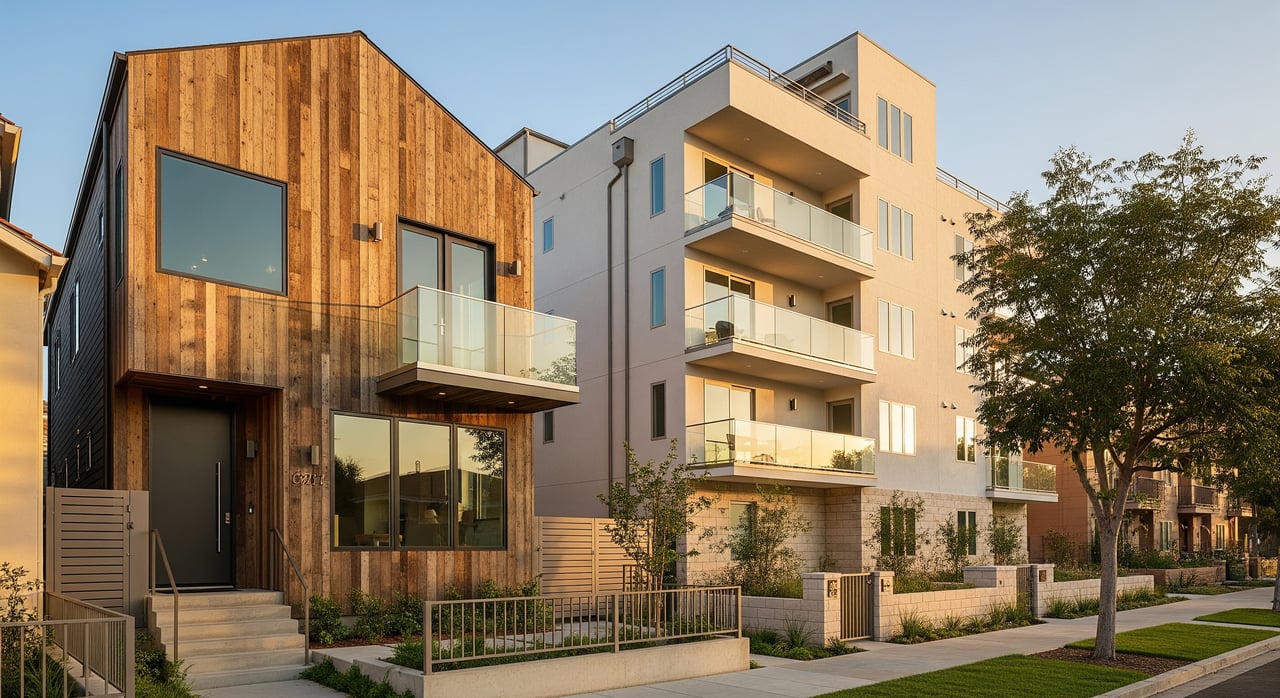
Trying to choose between a small-lot home and a condo in Highland Park? You have great options, but the details matter. Ownership, maintenance, privacy, financing, and HOA rules all work differently, and those differences shape your lifestyle and long-term costs. In this guide, you’ll learn how each option works in Los Angeles, what to expect in Highland Park specifically, and how to run smart due diligence so you can buy with confidence. Let’s dive in.
What small-lot homes are in LA
Fee-simple ownership on compact lots
Small-lot developments in Los Angeles were created to add housing while keeping single-family ownership. You generally own the structure and the land beneath it in fee simple. Each home typically has its own address, and many include a private entrance and small yard or patio.
Shared features vary by project
Some small-lot communities include private drives or easements for utilities. There may be an HOA to maintain things like gates, shared landscaping, or internal streets, but the scope varies by plat map and recorded CC&Rs. Always confirm responsibilities for your specific lot.
What condos are in LA
Common-interest ownership
With a condo, you own your individual unit’s interior space and share ownership or membership rights in common areas like hallways, roofs, parking structures, and courtyards. The exterior and land are typically maintained by the HOA.
HOA governance under state law
Condos are governed by an HOA that enforces CC&Rs, collects assessments, and manages maintenance. In California, condo and HOA operations follow the Davis-Stirling Common Interest Development Act and related civil codes. Expect formal policies, budgets, reserves, and rules that apply to all owners in the building.
Ownership and title: what you actually own
Small-lot homes feel closer to single-family ownership because you typically hold fee-simple title to your lot and home. You’re usually responsible for your home’s exterior and yard unless the project’s CC&Rs say otherwise. In a condo, you own the interior of your unit, while the HOA manages and insures common elements. This difference affects control over exterior changes, day-to-day maintenance, and long-term planning.
Maintenance, insurance, and monthly costs
Who fixes what
Condo HOAs usually handle exterior maintenance, roofing, building systems, and common landscaping. You handle interior upkeep. In small-lot communities, owners typically maintain their own exterior, roof, and onsite landscaping. If the development has shared drives or gates, the HOA may cover those items. The scope can vary widely.
Insurance differences
Condo HOAs purchase master insurance for the building and common areas, often with walls-out coverage. You still need an HO-6 policy for your personal property and interior improvements. Small-lot owners usually carry a standard HO-3 homeowner policy that covers the structure and lot. If an HOA exists, review where association insurance ends and individual coverage begins.
HOA dues and reserves
Condo dues tend to be higher and more frequent because HOAs fund building systems, common utilities, and long-term reserves. Small-lot HOA dues, when present, are often lower and focused on limited common elements like private streets or gates. In both cases, you should review the HOA’s budget, reserve study, insurance deductibles, and any planned special assessments.
Privacy and outdoor space
Everyday privacy
Small-lot homes often provide more privacy thanks to separate entries and private yards, even on compact parcels. Condos offer privacy that varies by building design and floor plan. Expect shared corridors, elevators, or common courtyards in many condo projects.
Outdoor living
If you want a ground-level yard, gardening space, or a spot to store bikes or gear, small-lot homes are more likely to deliver. Condos often provide balconies, terraces, or shared courtyards and rooftop decks. Amenity packages vary by building.
Noise and neighbors
Small-lot homes reduce neighbor noise transfer because you’re not stacked above or below other units. That said, small lots place homes close together, so proximity still matters. Condos can involve more shared walls and vertical living, which can increase the chance of noise from neighbors or common spaces.
Financing and investor notes
Loan eligibility and approvals
Condo financing often requires project-level eligibility. Lenders may review owner-occupancy ratios, delinquency levels, pending litigation, and commercial space percentages. These factors can affect available loan products, interest rates, or down payment requirements. Small-lot homes are usually underwritten like single-family properties, which can make financing more straightforward.
Rental rules and flexibility
Condo HOAs often set rental restrictions or caps, and many regulate short-term rentals. Small-lot homes, as fee-simple properties, tend to offer more flexibility for long-term rentals, subject to City of Los Angeles regulations and any project CC&Rs. Always verify the rules before you buy if rental use is part of your plan.
Highland Park factors to weigh
Transit and walkability
Highland Park’s Metro L Line station attracts buyers who value transit and car-light living. If you want to be steps from the train, a condo close to the station may be attractive. If you prefer a private yard yet still want access to York Boulevard or the Figueroa and Colorado corridors, certain small-lot infill streets can offer a good balance.
Parking and street dynamics
Parking is a recurring factor in Highland Park. Small-lot homes often include a private garage or driveway. Condos may include deeded parking, though guest parking can be limited in some buildings. It is smart to check any street-parking district rules and observe local parking conditions at different times of day.
Zoning and nearby development
Highland Park is seeing ongoing infill. Future development on neighboring lots can affect light, privacy, and views. Before you commit, review City of Los Angeles Planning and Department of Building and Safety records for property-specific approvals, restrictions, and any active applications near the home or building you are considering.
Project-by-project variability
On the same block, you can see very different outcomes. Small-lot site plans vary in privacy and yard usability. Condo buildings differ in construction, sound attenuation, and amenity packages. Focus on the specific plat map or condo plan rather than the label alone.
Resale and marketability
Buyer fit
Small-lot homes often appeal to people who want land ownership, a private entry, and control over exterior choices. Condo buyers often prefer lower exterior maintenance, amenities, and a lock-and-leave lifestyle, sometimes at a lower entry price for the neighborhood.
What supports value later
Resale strength depends on the project’s reputation, the HOA’s financial health, and the specific location within Highland Park. Outdoor space, parking, views, and condition help on both sides. Projects with litigation, high delinquencies, or low reserves can narrow your buyer pool and financing options later.
Quick decision guide
Choose a small-lot home if you want:
- Fee-simple land ownership and a single-family feel.
- A private entry and often a usable yard or patio.
- More control over exterior modifications, subject to local rules and any CC&Rs.
- Typically simpler single-family style financing.
Choose a condo if you want:
- Lower exterior maintenance handled by an HOA.
- Access to amenities like shared courtyards, rooftop decks, or security.
- A lock-and-leave lifestyle near transit and major corridors.
- A potentially lower initial price point in the neighborhood.
Buyer due-diligence checklist
Title and ownership
- Confirm deed type: fee-simple lot or condo unit. Review any easements, private street agreements, and recorded CC&Rs.
HOA and CC&Rs
- Obtain CC&Rs, bylaws, budget, reserve study, insurance certificates, recent meeting minutes, delinquency reports, and any pending litigation disclosures.
Insurance and inspections
- For condos, verify master policy scope and deductibles. For small-lot homes, get an HO-3 quote. For condos, get an HO-6 quote. Schedule a full inspection that includes common areas or structural elements where applicable.
Financing
- For condos, have your lender check project eligibility early, including owner-occupancy ratios and rental rules. If using FHA or VA, verify project approval at the start.
Parking and storage
- Confirm assigned parking, guest parking policies, EV readiness, and storage availability.
Rules and lifestyle fit
- Review pet policies, quiet hours, rental restrictions, exterior modification approvals, solar guidelines, and landscaping responsibilities.
Neighborhood and site review
- Visit at different times. Check the walk to York Boulevard or the Metro L Line station if that matters to you. Review nearby development activity and parking district rules.
Next steps
Your best choice will come from clear priorities and disciplined due diligence. If you want help comparing a specific small-lot home and a condo in Highland Park, aligning lender and HOA reviews, and crafting a winning offer strategy, connect with a local pro who treats the process like a project plan. For a focused, outcome-driven approach backed by white-glove support, reach out to Chris Reisbeck. Let’s Connect.
FAQs
Will I own the land in a Highland Park small-lot home?
- In most Los Angeles small-lot subdivisions, you hold fee-simple title to the structure and the lot, subject to any recorded easements and CC&Rs for shared elements.
Are HOA dues usually higher for condos in Highland Park?
- Typically yes, because condo HOAs maintain building systems and common areas and must fund reserves, though exact dues and services vary by project.
Who handles roof and exterior repairs in each option?
- Condo HOAs usually handle exterior and roof work, while small-lot owners commonly maintain their own exteriors and roofs unless the CC&Rs assign that to an HOA.
Is financing harder for condos in Los Angeles?
- It can be, since lenders review project-level eligibility, including owner-occupancy ratios, litigation, and reserve health; small-lot homes are often underwritten like single-family homes.
Can I add solar panels or an ADU on a small-lot home?
- Small-lot owners often have more flexibility, but you must follow City of Los Angeles rules, permitting, and any CC&Rs; condos typically restrict exterior changes.
Which is better if I want to live near the Metro L Line?
- Condos near the station can be compelling for transit access and a car-light lifestyle, while some small-lot homes offer a yard with reasonable proximity; the right fit depends on your priorities.